Posts

Showing posts with the label Sony

why we'll never have a true digital nikon fm3a, and why the nikon df is wrong for me

Image
Top view: Nikon Df vs. Nikon FM3a (via TheOnlinePhotographer ) I came across this scale comparison on the Internet's today. In one simple picture it summed up why the Nikon Df isn't the digital FM3a so many want it to be. It also illustrates in part why (outside of the price) I won't purchase the Df. If you look at the top plates of both cameras, you can see the top plate outline of the FM3a literally sticking up from the Df body. The Nikon Df is much deeper than the FM3a from the front (the lens mount) to back (the LCD). What we have here is an odd-ball digital camera design that appears to have bits and pieces of the FM3a stuck on it like a collection of spare parts someone had lying around at the time. When old people like me say they want a digital Nikon FM3a (or in my particular case, a digital Olympus OM-1), we want the film sized body with a same-sized digital sensor replacing 35mm film. And as the Nikon Df illustrates so eloquently, that won't happen...

blinded by emotion - problems using adapted lenses with the α7

Image
Sony α7R There are some interesting posts coming out now about the success (or not) of adapting alien lenses to the Sony α7/α7R dynamic duo, in that it might not be what everyone has initially hoped for. Right now is the honeymoon phase of the Sony Î±7 releases, where a golden light shines over the universe and the Sony Î±7 can do no wrong. One of its vaunted features in the minds of its most ardent supporters is that it's a better camera body for every other lens ever made, especially Leica lenses. All you need is an adapter... Perhaps, and then perhaps not. The first word of caution I read comes from The Online Photographer (yes, those guys) and a post made back last Wednesday titled " Two Reasons... " Give credit to Mike Johnston for publishing both sides of issue, in this case the use of Leica lenses via an adapter on the Sony α7 bodies. The first reason in the post is a link back to Roger Cicala's article " There Is No Free Lunch, Episode 763: Lens A...

contemplating the sony α7 release aftermath

Image
Sony α7R It's been a week since Sony introduced the α7 pair of cameras to a giddy hyperbolic audience of camera gear dweebs. You would have thought it was the second coming of Christ in some quarters. After the dust settled surprisingly quickly, I came to the same conclusion about the camera and system that a number of others hinted at between the lines of their various hands-on previews. It's too expensive for what the system currently delivers. That's not to say that, from an engineering perspective, it's poor. Far from it. From an engineering perspective it's something of a tour de force. Sony took its fixed lens RX1, a 135mm sized sensor fixed lens camera, and essentially combined it with the E mount to create the Î±7. In one fell swoop they asserted their leadership in this specific domain over both Canon and Nikon. But that's just in this one particular domain (a pure mirrorless interchangeable lens camera with a 135mm sized sensor). The digital ...

sony's pivotal mirrorless move

Image
Sony α7R I'm a died-in-the-wool technologist, even when it comes to photography. I have always been fascinated with the technology that goes into manufacturing any camera, from the lenses (optics) through the mechanical construction, the electronics involved, and especially the chemistry of the film and the sophistication of the digital sensor. It's amazing that the camera can do all it's asked of it, regardless of manufacturer. Of all the types of cameras that I've really taken an interest in, contemporary mirrorless (again, regardless of manufacturer) are the most interesting because of the challenging problems the scientists and engineers have had to solve in order to build a compact but highly functional camera. In particular I've followed the sensor advances over the years and watched image quality climb (especially with μ4:3rds) to exceed film and rival one another such that there's very little difference any more as you move from the smaller sensors...

can you tell the difference?

Image
Four photographs, two from the Olympus E-M5 with Panasonic Leica 25 mm and two from the Sony NEX-5N with Sigma 19 mm. Both sensors with 16 MP resolution. Does knowing the difference really matter anymore if you can't see it? Group 2 All photographs taken in Key West Florida, post processed in Lightroom 5.2 and Color Efex Pro 4.

the ever so interesting α3000

Image
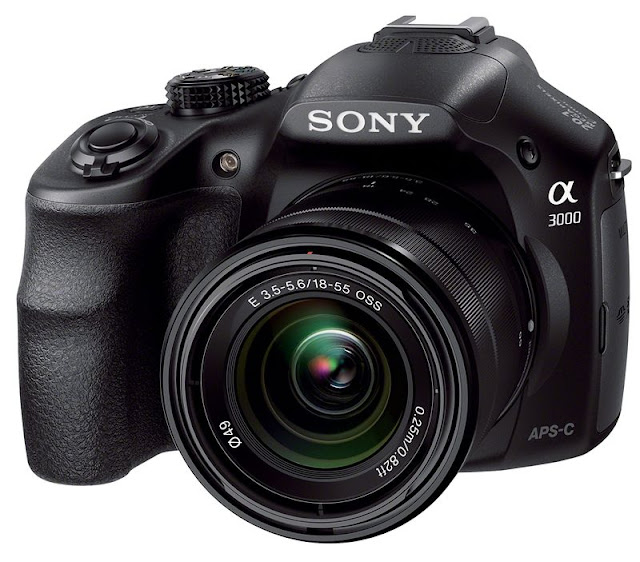
Sony α3000 with E-mount 18-55mm kit zoom ( via 1001 noisy cameras ) So Sony finally went and did it. They took the basic components of the NEX line (the E mount, the sensor, the mirrorless box, and the EVF), added them to a DSLR-alike body, and bundled it with an existing E-mount 18-55mm kit lens for the shockingly low, low price of $400. A price you don't normally see on a mirrorless camera unless its been out for 6-12 months and then put on a fire sale. This is Sony's way of telling Canon's Rebel and Nikon's D3x00 class entry level DSLR cameras to go and take a hike. I have heard all the critics harp about how the E-mount lenses were too large for the NEX bodies, how using their APS-C sensor somehow doomed the highly innovative NEX cameras to a lingering death. And all those reports reporting how mirrorless was doomed in general. I guess Sony decided if you can't beat them, join them. They took their box of NEX parts, mixed in a DSLR design body, and voilà...

the staycation (of a sort, where we stayed in florida)

Image
Everybody wants a photo here Staycations came into vogue starting around 2007, when the Great Recession really began to exert itself late 2006/early 2007. Folks just didn't have the cash/credit to go gallivanting across the country, let alone around the world. And so they went back to doing what their parents and their prior generations used to do; they started to go to local spots close to home, spending as little as possible. And they've been doing it pretty much ever since. Economic times since the start of the Great Recession have barely improved. Massive job losses, especially towards the beginning, were the norm. I managed to hang onto my job through the worst of it, only to finally loose my job back on 17 April of this year, when, without any warning it was coming, I went from gainful employment to out on the street unemployment in less than 30 minutes. And yet, in spite of the odds that were supposedly stacked against me (in particular my age), I managed to land m...

the olympus e-p5

Image
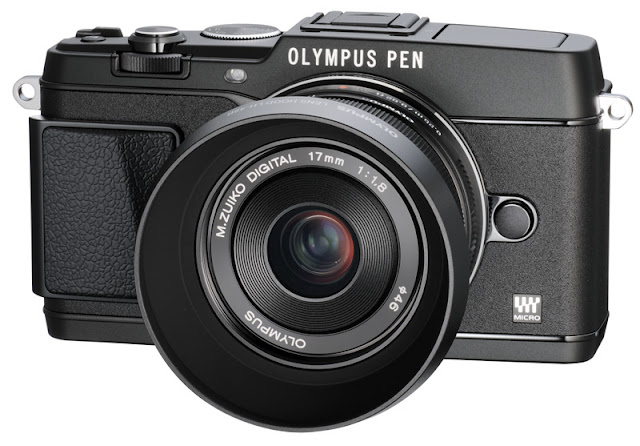
Olympus E-P5 with M.Zuiko 1.8/17mm lens, all in black It's now official. Olympus has released the next true Pen, the E-P5. I say the next "true Pen" because the E-M5, which I own, is a different model line altogether, and doesn't have the word "Pen" anywhere on it, not the body nor the box it was shipped in. This Pen is a far better camera than the two-year-old E-P3, which I was not at all happy with when it was introduced. Olympus took all that is good about the E-M5, especially the sensor, mixed in the best bits from the Pen line (both the old film Pens as well as the newer digital lines), fixed what needed fixing and produced this current iteration. And from what I can tell so far it's a pretty decent iteration of the Pen side of the Olympus camera lines. The only problem is the cost. The body alone is $1,000. You can pick up the still-excellent E-M5 for about $100 less. If you buy the "super kit", which includes the new black 1.8/1...

red day in a red state

Image
Technical Sony NEX-5N with Sigma 2.8/19mm. Post in LR 4 and Color Efex 4.

what i want in a camera i finally have

Image
I have over the last few years written about my wants in a camera. And then today, for whatever reason, I realized I pretty much have what I've yearned for. How did that happen, you ask? The sensors, specifically the Sony sensors, came along and gave me pretty much all I ever asked for with regards to image quality, my biggest want. In particular, the sensors in the NEX-5N and E-M5. They're pretty well matched where it matters to me. Yes, yes, the NEX-5N scores slightly higher numerically than the E-M5 according to DxOMark, but in practical use, they're essentially equal, and compared to the three Pens in my collection, they are well beyond what I'd been working with in regards to overall sensor capability. And to be honest the Pens aren't all the bad to start with. Model DxOMark score color depth, bits exposure range, EV low-light, ISO Year announced NEX-5N 77 23.6 12.7 1079 2011 E-M5 71 22.8 12.3 826 2012 E-PL2 55 21.4 10.2 573 2010 E-PL1 ...

nexxie sunday

Image
I was supposed to go to the spring Fiesta in the Park at Lake Eola today. My wife went downtown to the Bob Carr to watch Madama Butterfly with a friend. On the way back I intended to stop at the Fiesta and walk through, looking for photographic opportunities. But as I drove near where it was being held I found no place to park except for all the little spots near apartments and other small parking lots where local folk had set up for-pay parking starting at $5 a pop and up. That pretty much killed any desire I had to visit. Instead I drove on down to a Burger King on Orange, near Michigan, and spent $5 on a basic lunch. What is interesting about the current Burger King stores are the new, nineteen-fiftyish style the stores are all adopting. Lots of bright colors, primarily bright oranges, with vinyl coverings on seat bottoms and backs. I don't know why they'd choose this particular design motif, but it reminds me of older places I used to eat at when I was a kid living in ...

It's a World of Colour

Image
Whether it's stark colors and sharp edges or muted, rich colors that remind me of the old Renaissance masters, the world is full of color, even if those colors border on black and white. That does not mean it's a black and white world. Black and white is an artificiality we imposed on our world because that's all we had for the most part, especially in early photography. From black and white prints in old newspapers, to monochrome photographs stretching back to the late eighteenth century, black and white was  de rigueur . Color was the very rare exception. My first camera was an Instamatic 104. The first photos to come out of it were black and white. When I started developing film on my own it was Tri-X, both 35mm and 120/220. Color, while certainly available, was expensive and required someone else to process and print, adding to the cost. That all changed with digital. All of a sudden I had the ability to work with color to a degree I never even had with film-and-...